


The smartphone era is ending the way it started: with Apple
The smartphone era is ending the way it started: with Apple

Don Lair Tue, October 13, 2026 at 6:01 PM UTC
0
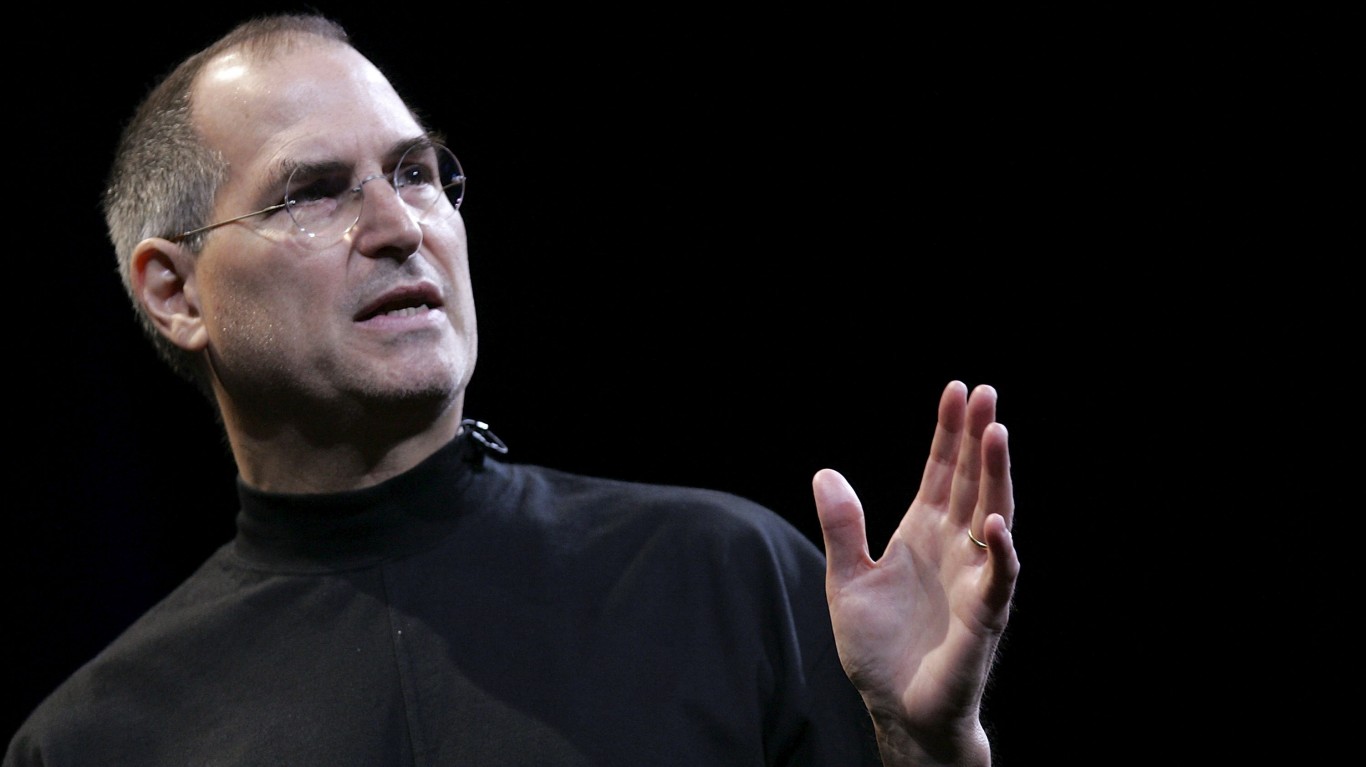
Justin Sullivan / Getty Images (Justin Sullivan / Getty Images)Quick Read -
Apple's Q3 FY2026 revenue hit $109.4B, up 16%, with new CEO John Ternus directing $11.7B in R&D toward AI glasses and custom silicon.
Meta holds 69.2% of the smart glasses market, but Apple's N50 glasses are targeting a price range of $200 to $500 and use over 1 billion iPhones as a compute backbone.
Display-less smart glasses surged 167% year over year in Q1 2026, with IDC projecting 27.3 million units by 2030, and Apple has not yet even entered the market.
Just released. Our analysts combed the entire stock market and named the ten best stocks to buy right now, and Apple didn't make the cut. Enter your email to see the names that beat AAPL. The report is free. Enter your email and see if any of your stocks made the cut.
In 2007, Apple opened the smartphone era. In 2026, Apple (NASDAQ:AAPL | AAPL Price Prediction) is positioned to close it. The handheld glass slab that reshaped computing is now the device the industry is racing to replace with always-on, heads-up ambient AI. The company that drew the first map is drawing the next one.
Apple's fiscal second quarter of 2026 set the tone. Net sales reached $111.2 billion, up 17% year over year, with net income of $29.6 billion coming in 22% above the year-ago period. iPhone alone delivered nearly $57 billion, a March quarter record driven by what Tim Cook described as "extraordinary demand for the iPhone 17 lineup." Services set an all-time high at $30.98 billion, up 16% year over year, at gross margins above 76%. Total company gross margin reached 49.3%, and R&D spending for the quarter climbed to $8.2 billion, up 34%, pointed squarely at AI and glasses hardware.
Free Report, Just Released
Why Didn't AAPL Make The Top 10 List?
24/7 Wall St has helped investors make money for over two decades, and our top analysts just finished ranking the definitive Top 10 Stocks To Buy Now. Not the ten biggest companies. Not the ten everyone is arguing about. The ten best stocks to buy right now.
And AAPL didn't make the cut!
The report is free, and you can see why we think each stock is a top investment today.
Enter Your Email and See the Ten →
The momentum carried into the summer. Apple's fiscal third quarter, reported July 30, produced another June quarter record: $109.4 billion in revenue, up 16% year over year, and net income of $29.8 billion with diluted EPS of $2.02, up 29%. iPhone contributed $54.3 billion, a 22% gain and a June quarter record in every geographic segment. Gross margin reached 50.1%, a figure boosted by roughly two percentage points of tariff refunds. Operating cash flow hit $34.4 billion, itself a June quarter record even before accounting for those refund benefits. Services revenue of $30.74 billion set a June quarter record as well, though it landed slightly below analyst expectations as foreign exchange headwinds bit into international results. R&D spending climbed to $11.7 billion, up 32% from a year earlier, as Apple accelerated investment across AI, custom silicon, and new device categories. The company's installed base of active devices topped 2.5 billion for the first time.
Those financials frame a pivotal leadership moment. Apple announced on April 20, 2026 that Cook would step down as CEO on September 1, transitioning to the role of executive chair of the board. John Ternus, who served as senior vice president of Hardware Engineering, took over as chief executive on that date. Johny Srouji stepped into an expanded chief hardware officer role to fill the gap Ternus left behind. The handover places a hardware engineering mind at the top of Apple just as the company prepares its most consequential product bets since the iPhone itself.
Advertisement
The roadmap is the thesis
Apple refreshed Vision Pro to M5 silicon and is now targeting a late-2027 commercial launch for its first Ray-Ban-style AI glasses. That timeline represents a meaningful slip from the original plan, which called for a late-2026 reveal and early-2027 shipment. Bloomberg's Mark Gurman reported in late July 2026 that Apple now plans to unveil the N50 glasses at WWDC in June 2027, with consumer availability following in the fall of that year. The delay reflects two concerns: unresolved questions about visual AI software performance, and a deliberate effort to build a privacy protection strategy before entering a category some critics have labeled "spy glasses." Apple's hardware and marketing teams have designated privacy as the top priority for the N50, aiming to differentiate sharply from the controversy that has followed Meta's competing products.
The N50 glasses will feature cameras, speakers, and microphones, offered in multiple frame styles with no in-lens display in the first generation. They will run a Watch-derived low-power chip and pair tightly with the iPhone rather than operate as standalone devices. Apple is targeting a price between $200 and $500 for the N50, putting it in direct competition with Meta's lineup.
The broader Vision roadmap has also shifted. A lighter, more affordable Vision Air headset was pushed to 2028 or 2029 after Apple redirected engineers toward the glasses project. Incoming CEO Ternus ordered a sharper focus on smart glasses over headsets, with analyst Ming-Chi Kuo reporting that the refined product set narrowed to two glasses products. Vision Pro Gen 2 with LCoS waveguides remains on the longer-horizon roadmap.
The structural advantages
Three competitive positions are difficult for rivals to replicate. The first is distribution: the iPhone install base of more than one billion units becomes the compute backbone for Apple's glasses, with most processing offloaded to the paired phone rather than handled by on-frame hardware. The second is silicon: Apple has reportedly booked more than 50% of TSMC's initial 2nm capacity for 2026, and the GAA nanosheet architecture delivers up to 30% better power efficiency than 3nm, a decisive edge in heat-limited eyewear. The third is capital: Apple holds approximately $147 billion in cash and marketable securities as of June 2026, providing ample runway for multi-year memory pre-buys as DRAM and HBM prices have surged.
The company returned substantial capital even as it invested aggressively. Apple authorized $100 billion in share repurchases alongside a 4% dividend increase to $0.27 per share quarterly. Through the first nine months of fiscal 2026, the company generated approximately $117 billion in operating cash flow, compared with $81.8 billion in the same period a year earlier. That cash generation gives Apple a level of optionality in hardware bets that most consumer electronics competitors simply cannot match.
Google and Meta as foils
Google's Android XR strategy relies on a coalition spanning Warby Parker, Gentle Monster, Gucci, Samsung, and Xreal. The breadth brings distribution, but it also brings fragmentation. Meta has a commanding head start: its Ray-Ban lineup held 69.2% of the global smart glasses market in Q1 2026, according to IDC, and EssilorLuxottica sold more than 7 million Ray-Ban and Oakley Meta units in 2025 alone, nearly three times the combined total from 2023 and 2024. Apple is developing its frames in-house rather than through co-branding partnerships, betting that owning the customer relationship, the silicon, and the retail storefront creates a more defensible position over time. The privacy positioning Apple is building around the N50 could prove equally important: it gives consumers a reason to choose Apple's glasses beyond the hardware specs.
The inflection
The smart glasses category is growing fast enough to matter regardless of which unit forecast proves accurate. IDC projects display-less smart glasses will reach 13.6 million units in full-year 2026, with revenue hitting $5.1 billion, and the category is expected to grow to 27.3 million units by 2030. Display-less smart glasses shipped roughly as many units in Q1 2026 alone as the entire category did across all of 2024, a 167% surge year over year. Either trajectory makes 2026 the breakout year, and Apple has yet to enter.
Apple is arriving late by design. That is the iPhone playbook: let a category prove itself, then redefine it. Risks remain, including U.S. and EU antitrust pressure on App Store economics, GDPR friction around camera-equipped frames, rising memory costs that Apple's own CFO has flagged as an increasing headwind, and potential yield slips on 2nm production. None of those risks alter the fundamental setup. By 2030, the smartphone peak will be remembered as the precursor to the ambient era.
Once again, Apple is drawing the new map.
Editor's note: This pass added context from Bloomberg's Mark Gurman (July 26, 2026) that Apple plans to unveil the N50 at WWDC June 2027 with a fall 2027 consumer launch, and that Apple's teams have designated privacy as the top priority for the glasses. It also added Q3 FY2026 iPhone revenue of $54.3 billion (up 22% year over year), the Q3 operating cash flow of $34.4 billion (a June quarter record), and noted that Q3 Services revenue of $30.74 billion, while a June quarter record, came in slightly below analyst expectations.
Got $1,000? Before You Buy AAPL, Read This
If you have cash sitting in your account right now, give this two minutes. After more than two decades of helping investors beat the market, our top analysts at 24/7 Wall St. put together a definitive report on the Top 10 Stocks To Buy Today. And AAPL wasn't one of them.
They combed the entire market. It's not 10 ideas, not 10 stocks everyone is talking about, it's what their research points to as the 10 best stocks to buy right now, and it's free. Read more here and see which stocks made the list -->>
Contact editorial@247wallst.com for any questions or corrections.
Source: “AOL Money”
